

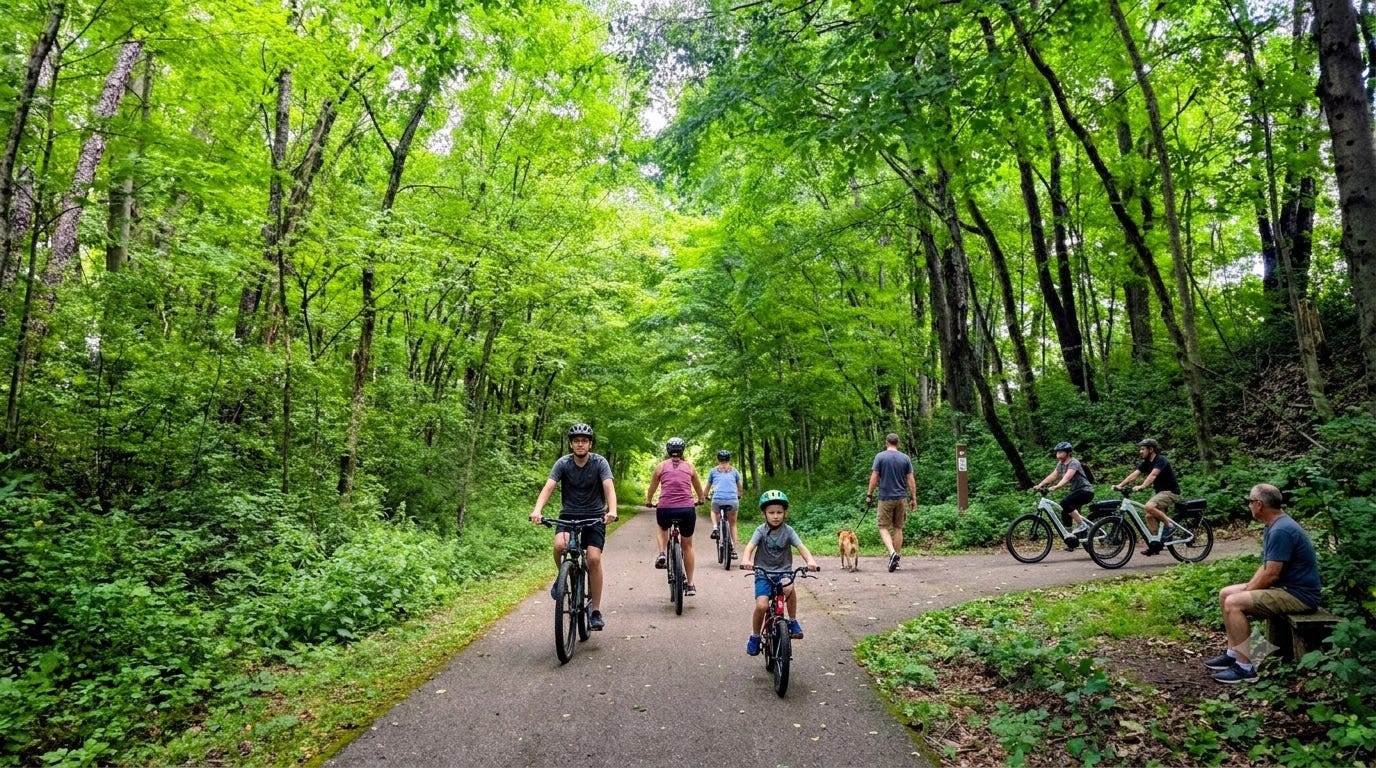
In many European countries, bicycles are part of everyday life for commuting, shopping, and running errands. E-bikes are widely accepted because they make those trips easier and more enjoyable. The conversation around their use and adoption is different because the cycling culture is different.
E-bikes have become common on American streets and trails. Much of the regulatory debate has focused on the bikes themselves. Concern about their power and speed is understandable. But it overlooks the larger issue of how America’s car-centered culture shapes attitudes and behaviors toward e-bikes and bicycles of all kinds.
Different Cultures, Different Results
Having explored Europe by bike, I’ve seen firsthand how bicycles are integral to everyday life, from small villages to large cities. Cycling is seen as a legitimate mode of transportation.
European communities invest in bicycle infrastructure and amenities that encourage and support regular riding. Europeans recognize cyclists as normal users of the transportation network.
Infrastructure investments and community acceptance didn’t create the European bike culture. They grew out of it.
How America Became Car-Centered
The United States followed a very different path. In the early twentieth century, government policy, automaker influence, and advertising portrayed automobiles as symbols of freedom and prosperity. It worked, and the country moved away from walking and cycling.
That movement grew stronger after World War II. Wider highways and the interstate system reshaped American cities, fueled suburban growth, and made traveling longer distances more appealing. Urban design and transportation networks prioritized cars over bikes.
Bicycles were no longer viewed as everyday transportation. They became tools for recreation, fitness, and sport. That history influences how many Americans think about cycling today. A person on a bike is often assumed to be out for exercise rather than simply trying to get somewhere.
E-Bikes Are Changing the Story
Today’s e-bikes are reshaping that twentieth-century transportation story. They help older adults keep riding, make short car trips easier to replace, and open cycling to people who otherwise wouldn’t get on a bike.
E-bike adoption is moving quickly, but American culture is changing more slowly. Cars still dominate everyday transportation. E-bikes offer a lower-cost, lower-maintenance option that is earning a place alongside the car in the garage.
Trails are becoming connected transportation networks. Cities are adding bike lanes and amenities to reduce pressure on crowded streets and highways. Commuters on e-bikes, along with recreational cyclists, are becoming more visible on streets and trails.
Slowly, American culture is evolving toward a bike-friendly, car-centered model in which bicycles are increasingly seen as another expression of freedom and prosperity.
Culture Comes First
For cycling to become a valued part of everyday American life, the culture around it has to change. Rules matter. Education matters. Enforcement matters. But culture comes first.
Culture shapes behavior. Behavior shapes expectations. Expectations shape policy.
When people expect to share trails with others, they tend to be more courteous. Cyclists pay closer attention to their speed. Pedestrians feel safer sharing the trail. Communities invest in better infrastructure because they see bicycles as transportation, not just recreation.
Culture does not change overnight. It changes one cyclist, one conversation, one community, and one trail at a time.
The future isn’t only about building more trails or writing more rules. It’s helping people see how cycling, whether on a traditional bicycle or an e-bike, improves health, reduces dependence on cars, connects communities, and gives more people the freedom to travel under their own power.
When people understand that value, behavior changes. When behavior changes, everything else begins to change with it.
We Don’t Need to Become Europe
I’m not suggesting the United States should become Europe. Our geography, communities, transportation systems, history, culture, and challenges are different. For generations, we’ve designed our cities and suburbs around the automobile.
But we don’t have to become Europe to learn from it.
We can build an American cycling culture that reflects who we are while recognizing a lesson many European countries have already demonstrated: bicycles, including e-bikes, aren’t just recreational equipment. They’re practical, everyday transportation alongside walking, driving, and public transit.
The goal isn’t to copy another country. It’s creating a culture that works for American communities: urban, suburban, and rural, where people feel comfortable choosing a bicycle for practical trips and where everyone understands that cyclists belong on our roads and trails.
What Readers Are Telling Me
More than 200 readers have already shared their perspectives on e-bikes. Every response paints a clearer picture of what’s working and what still needs attention. Your voice helps shape future articles in this series exploring how to make our trails safer, more welcoming, and more enjoyable for everyone.
The responses reinforce what this article argues: the debate over e-bikes isn’t really about the battery. The biggest concerns aren’t only about e-bikes. They’re about behavior: unsafe speeds, poor trail etiquette, lack of awareness and education, and e-motos that belong on roads, not on trails.

If you haven’t yet participated in my e-bike survey, I hope you’ll take a few minutes to do so. If you haven’t already read my previous Tom on the Trails article, “And What About E-Bikes on Trails?”, I encourage you to start there. It explains the purpose of the survey, why I’m conducting it, and how your experiences can help shape the conversation.
Take Tom on the Trails E-bike Survey here.
Tom, what are trail organizations and trail managers doing to promote e-bike etiquette?