

When I published my recent article, And What About E-Bikes?, I hoped to start a conversation, not settle an argument. So far, that’s exactly what’s happening.
More than two hundred have taken the time to complete my e-bike survey. While there are certainly differences of opinion, one thing is remarkably clear. The biggest concern people have about our trails today isn’t only about e-bikes. It’s about people.
As I’ve read through the responses, four themes are surfacing: excessive speed, poor trail etiquette, inexperienced riders, and a need for better education. This suggests that trails change as both trail use grows and e-bikes become more common on them.
The challenge isn’t simply adapting to e-bike technology and capabilities, but more about learning how to share trails safely and considerately.
What’s encouraging is that most respondents aren’t calling for bans or sweeping restrictions. Instead, they’re asking for better ways to address these challenges.
Excessive Speed
Speed dominates the concerns.
Whether respondents ride traditional bicycles, e-bikes, or walk the trails, they see riders traveling too fast for conditions. Interestingly, most don’t believe speed is exclusively an e-bike problem. Strong riders on traditional bikes can travel just as fast or faster than e-bike riders.
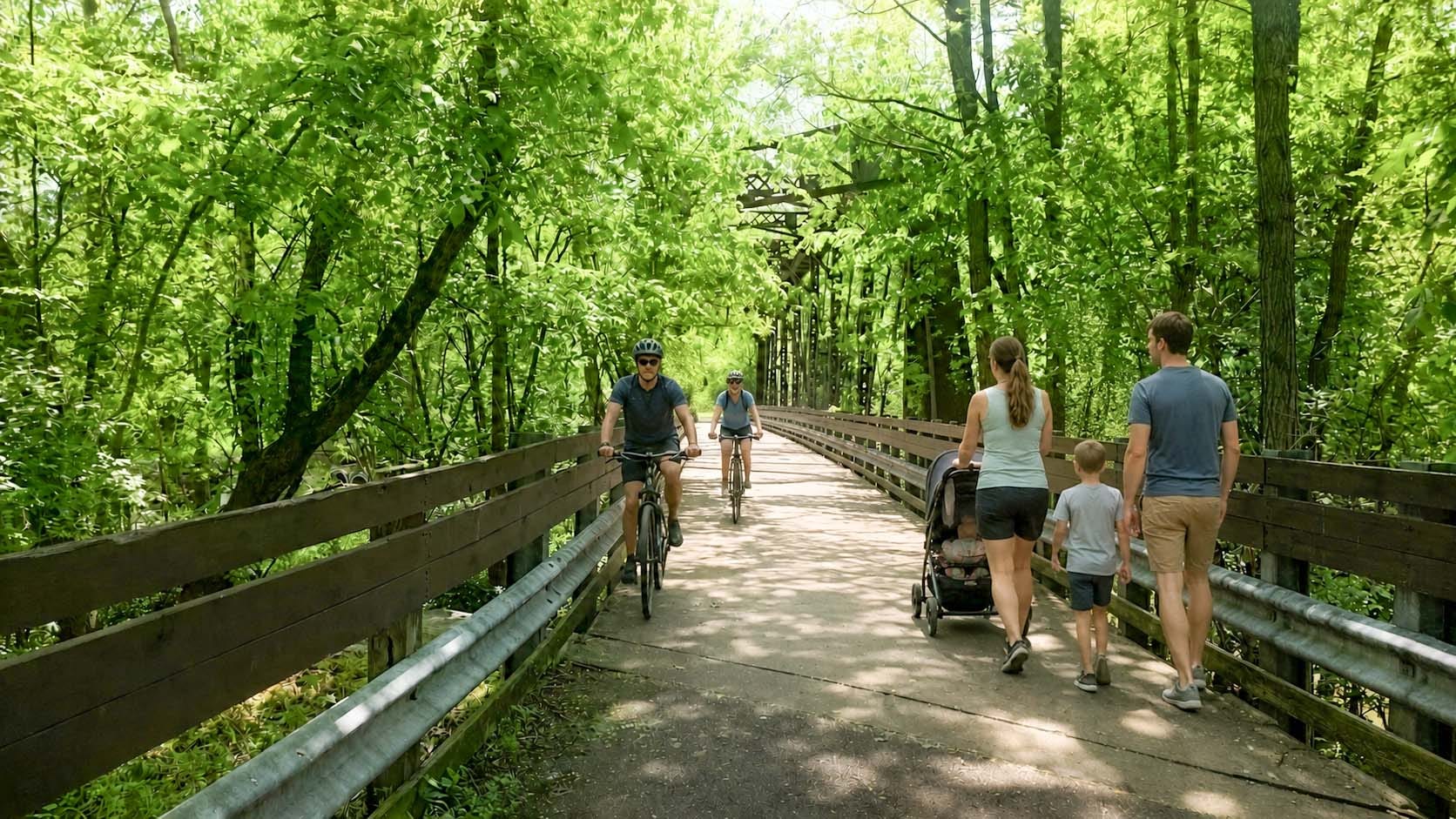
Multi-use trails aren’t racecourses. They’re shared public spaces where riders, walkers, runners, families with children, people walking dogs, and those on mobility devices have an equal right to feel safe.
One of the biggest challenges trail managers face is encouraging safe speeds. Speed-limit signs are the most common way they respond. Too often unseen or ignored. Social media campaigns promoting trail courtesy help. Ultimately, speed is a choice each rider makes.
The goal isn’t only to slow people down. It’s to help riders understand that excessive speed endangers both themselves and others. Excessive speed makes trails unsafe and unwelcoming.
The real issue isn’t what the bike can do. It’s whether the rider uses good judgment in deciding what they should do.
Poor Trail Etiquette
Speed is closely connected to basic trail etiquette.
Passing without warning, riding side by side, blocking the trail, wearing headphones that make it difficult to hear others, and speeding past slower visitors is frustrating, no matter what type of bike someone rides.
Good etiquette is what makes shared trails work well. Announcing passes, slowing when necessary, yielding appropriately, and exercising patience aren’t new. These basic courtesies are becoming less common as trail use increases.
The lesson is simple and familiar: mind your manners. That life advice applies on the trail. Be courteous. Follow basic etiquette. Respect others. Education and awareness may do more to improve safety than e-bike rules alone.
Inexperienced Riders
Another recurring theme is that e-bikes are introducing a growing number of new riders to our trails.
Cycling, once viewed as recreation, is serving more purposes and more people. Respondents see this as one of e-bikes’ greatest strengths. Older adults are riding again. People with physical limitations are enjoying trails they believed were inaccessible to them.
People are using e-bikes instead of cars to save money, as battery assistance, lower transportation and maintenance costs, and rising car ownership expenses make them an appealing option.
Those are changes worth celebrating.
Survey responses suggest that many new e-bike riders have limited cycling experience. They may never have learned fundamental riding skills or trail etiquette because they never needed them. At the same time, experienced cyclists who transition to e-bikes can underestimate the added power, acceleration, and speed that electric assist provides.
The solution isn’t to discourage new riders. It’s to welcome them while giving them the knowledge and confidence to ride safely and responsibly.
Need for Better Education
Another solution that’s surfacing in the responses is education.
Many believe the public still doesn’t understand the classes of e-bikes. Some assume every e-bike is essentially an electric motorcycle. Others don’t realize that class 1 e-bikes assist only while pedaling and stop assisting at 20 mph.
Education must go beyond understanding how an e-bike works. It’s learning proper trail etiquette, whether riding a bike, walking, running, or pushing a stroller.
It’s seeing that every trail visitor experiences the trail from a different perspective. It’s understanding rules, respecting one another, and accepting the shared responsibility that comes with public spaces.
Who is responsible for that education?
It begins when the bike is sold. Bike shops have an opportunity to introduce new e-bike riders, beyond features, to the responsibilities of riding on shared-use trails, with more power at their fingertips.
Trail organizations reinforce those expectations through signs, social media, and educational campaigns.
Trail and outdoor advocacy must shape public policy and understanding as e-bike laws evolve and trail use changes.
Communities must ensure that residents and visitors alike, regardless of experience or skill level, understand what it means to bike safely, behave courteously, and share the trail responsibly.
Education alone won’t solve every conflict. Without it, even the best laws and trail rules can only go so far.
What I’m Hearing
What impresses me is how balanced the comments are.
Most see the tremendous opportunities e-bikes provide, allowing more people to discover cycling and others to keep cycling later in life and enjoy the outdoors.
At the same time, you want our trails to be safe, welcoming, and enjoyable for everyone. Those aren’t competing goals. They can and should exist together.
As I read the responses, I’m becoming more convinced that this isn't just about e-bikes. It's about how our trail community adapts to welcome them while preserving the culture of courtesy, patience, and respect that makes trails special.
Written responses don't tell the whole story. When viewed alongside the survey's other questions, they point to a broader conversation about how e-bike regulations should evolve and how those changes should be made.
I’ll be taking a closer look at that side of the survey in a future article. It’s a complex issue with no simple answers, requiring a balance between safety, practical use, and regulations that make sense for trails and people who use them.
Stay tuned.
Thank You. There’s Still Time
I want to sincerely thank everyone who read my initial article and completed the survey. Your thoughtful comments are moving this conversation beyond assumptions and toward practical solutions.
If you haven’t yet shared your thoughts, I’d still love to hear from you.
I’ll keep the survey open until the middle of July. After that, I’ll summarize the results and share what we can learn from this community conversation.
The more voices we hear, the better we’ll understand not only where we disagree, but where we find common ground. Judging from the responses so far, there’s more common ground than many of us expected.
Chime in on the conversation here.
The fact that people are finding common ground instead of digging into camps is probably the most encouraging result so far.
Thank you for creating this survey and sharing the responses so thoughtfully. I look forward to hearing more about the conversation!