

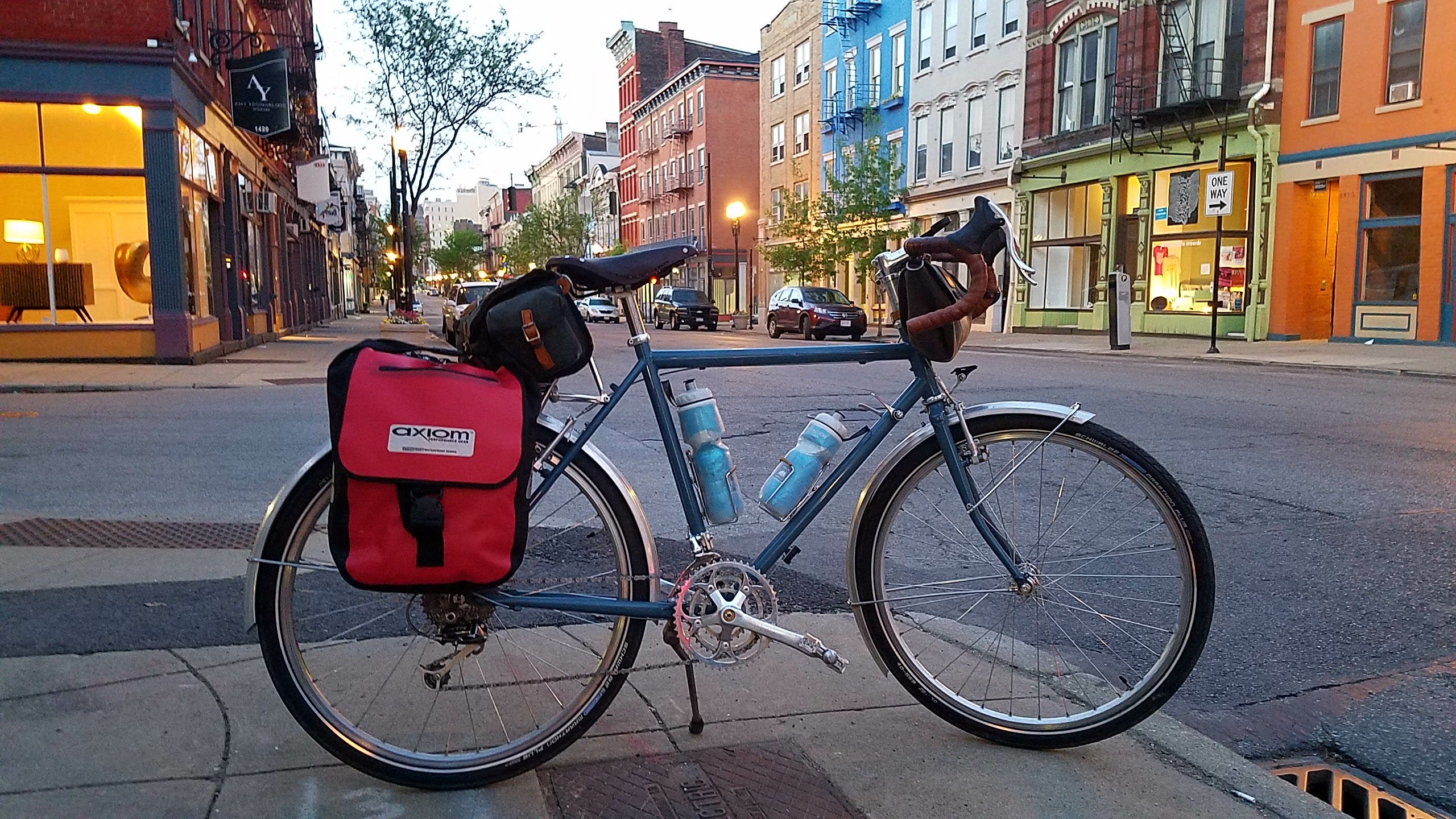
In the summer of 2011, I stepped out of my comfort zone and into something I never imagined I could do. My friend Chuck and I headed out on our first bicycle tour, a week on the Great Allegheny Passage and the C&O Canal Towpath Trail. We cycled self-supported through western Pennsylvania and Maryland, carrying everything we needed on our bikes.
Up to that point, my cycling experience was weekly trail rides with friends, usually 20 to 30 miles at a time, no overnight stays, and no gear beyond a water bottle and snacks. Now, I was going to ride farther than I ever had before, hauling clothes, tools, and camping equipment. Intimidating!
First Tour Fears
I’ve been thinking back to that first tour and the fears I had before setting out. Looking back, I realize most of the fears were perfectly normal. They are probably the same worries many people have when they think about touring for the first time.
There’s something vulnerable about heading into the unknown on two wheels. Social media and travel brochures show enticing nature and smiling faces. They don’t show the questions before the ride. What if I’m not strong enough? What if something breaks? What if I get lost? What if I don’t enjoy it?
Touring by bike is real life. The weather is unpredictable. The bad weather comes along with the ride. Mistakes are bound to happen. Those moments are also what make the touring experience memorable and meaningful. If you’ve been thinking about your first tour but fear is holding you back, here are 10 familiar worries and how to move past them.
1. I’m not in good enough shape.
This is likely the loudest fear for first-time bike tourists. Maybe you ride 10, 20, or 30 miles on the weekend and cannot imagine doing 50 miles day after day with gear on your bike. I understand that feeling. I had it too.
I learned from both cycling and running that if you are comfortable riding about 60 percent of the target daily distance, you can go farther than you think. If your goal is a 50-mile touring day and you regularly ride 30 miles comfortably, you likely can do just that.
Touring is not a race. You stop more often, for snacks and lunch, and to capture memories on your phone. As the days pass, your body adapts surprisingly quickly. Confidence builds one day at a time, and what once seemed impossible is possible.
2. I’m afraid it will be too hard.
This fear is easily solved with planning. First-time tourers tend to build ambitious itineraries, thinking they need to prove something. You don’t.
The smartest thing you can do is choose terrain that matches your comfort level. If you are not confident climbing steep hills, don’t pick a rolling route. That’s why rail trails and canal towpaths are good places for newbie bike tourists. Most have gentle grades, allowing you to focus on learning rather than surviving.
The first bike tour is where you learn whether you are a cyclist who tours or a tourist who cycles. Cyclists who tour enjoy long mileage days and the challenge. Tourists who cycle prefer shorter riding days, prioritizing the experience. I definitely fall into that second category these days.
Neither approach is wrong. You may favor a variation that’s some of both. That’s fine. You must plan a tour that fits the version that speaks to you.
3. I’m afraid I’ll get lost.
This was my biggest fear on my first solo European tour, being unfamiliar with foreign bicycle routes, languages, and customs. Touring alone, nobody else makes the navigation decisions or checks the map for you.
Technology makes touring much easier today. GPS devices and phone apps allow you to download and navigate routes. Many trail systems and cycling destinations offer excellent maps and guidebooks. Carry a printed guide or map as a backup in unfamiliar wilderness areas with spotty cell service.
Getting lost is part of the adventure. Some favorite touring memories came from accidental detours that led me to a photo-worthy scene and a chat with a local. Friendly faces more often pointed me in the right direction. Wrong turns become stories that live on for years after the tour.
4. I’m afraid I’ll have bike problems.
The most common problem with your bike is a flat tire. It’s bound to happen. I can pretty much guarantee it. Being prepared is the best way to reduce this fear.
Before your trip, practice changing the inner tube at home several times until you are comfortable. Pay special attention to removing and reinstalling the rear wheel, which can be intimidating. Carry a spare tube, tire levers, and a patch kit. They are lightweight, inexpensive, and worth every ounce.
Cyclists are incredibly generous and helpful. If you are trailside struggling with a flat, there is a good chance someone will stop and lend a helping hand. If you can’t fix a flat, it is wise to carry a patch kit and an extra inner tube for this reason.
Most other mechanical issues are rare. For major issues and unusual bike malfunctions, know where bike shops are located along your route.
5. I’m afraid I’ll pack wrong.
Every first-time bike tourist overpacks. Every single one. You will do it on every tour you take. Fifteen years in, I am guilty of this touring sin.
Start with the basics: clothing, tools, chargers, toiletries, and camping gear if you plan to camp. You need to tame “what if” thinking. Overplanning for every what-if scenario adds weight to an overloaded, harder-to-pedal bike.
The best approach is to make a packing list and refine it, over and over. Ask yourself honestly whether you really need each item. You likely don’t need four cycling jerseys or multiple pairs of shoes. It’s unusual not to have places to wash clothes and buy snacks, drinks, or forgotten items.
How will your days play out? Do you want to cook and set up camp each night and break it down in the morning? Would you rather travel light and stay in Airbnb’s or hotels? There is no correct answer. If camping overwhelms you, it’s wise to start with an inn-to-inn route that builds confidence.
6. I’m worried about the weather.
Rain is part of bicycle touring. If you tour long enough, you are going to get wet.
The key is realizing a little rain doesn’t ruin the experience; sometimes becoming part of the adventure. Days of cold, nonstop rain are another story. Pay attention to seasonal weather and the 10-day forecast. Bring the right layers, pack a rain jacket, and prepare for changing conditions.
Headwinds are a challenge every touring cyclist faces. Riding into a strong one makes a climb seem like an all-day uphill battle with wind. With experience, you develop the steady pace that moves you forward and upward.
7. I’m worried about my safety.
Safety concerns are valid and real. Trails are a great way to start bicycle touring because they minimize traffic interactions and challenges. Back road cycling routes avoid cities, tend to be safe, but require an understanding of traffic laws and defensive cycling.
Safety starts with preparation. Wear a helmet. After a few spills over the years, I’m convinced mine prevented serious injury. Use bright lights, lock your bike when you stop, and stay alert to your surroundings. Keep your loaded bike in sight whenever possible and limit the time away from it.
Most importantly, trust your instincts. If a place or situation does not feel right, listen to that feeling. Don’t let fear convince you that the world is entirely dangerous. Most people you encounter while touring are kind, curious, and helpful.
8. I’m afraid something bad will happen.
This fear pops up when you are looking at remote stretches of trail or rural roads. What happens if I crash? What if my bike becomes unrideable? What if I am exhausted and simply cannot continue?
Self-reliance, realizing you’re more capable than you think, is part of bicycle touring. Carry a fully charged phone with a navigation app, a GPS device with your route, and battery packs. Make a habit of recharging at lunch.
Route planning eases anxiety. Know the towns, campgrounds, restaurants, grocery stores, and bike shops along your route. Breaking the day mentally into smaller sections makes life on the bike more manageable. Ten miles to the next town is far less intimidating than 10 more miles in the middle of nowhere.
9. I’m afraid I’ll be lonely.
A lot of first-time tourists worry about loneliness and safety.
What surprised me about solo touring was how rarely I felt alone. Locals and fellow cyclists offer a wave or a friendly hello as they pass by. Conversations are common in diners and coffee shops. Some of the best memories come from those unexpected connections with people met on the tour.
If you camp, choose popular campgrounds with good reviews. Avoid isolated primitive camping until you gain more experience and comfort. Warmshowers and Hipcamp offer camping in homes or yards.
Touring and cycling communities, both online and in person, offer valuable advice, encouragement, and sometimes even riding partners. A local bike club is often a great place to begin. Bike tourists love to help newbies.
10. I’m afraid I won’t enjoy it.
That uncertainty is completely normal. Setting out on a first tour, there’s a mix of both excitement and doubt. You are stepping into something unfamiliar while hoping it is everything you dreamed of.
Honestly, not every moment is magical. There are difficult miles, uncomfortable weather, sore legs, and more than a few frustrations. Remember that your first tour is not about being the perfect bike tourist. You don’t need state-of-the-art gear, perfect planning, or unwavering confidence.
The real goal is to learn. You learn what kind of rider you are, what speaks to you on the road or trail, and how capable you actually are. That translates to developing your unique touring style.
If the touring experience speaks to you, everything changes afterward. You look at maps differently. Trails and roads become invitations to explore instead of being distant, unknown places.
This starts with your first tour.
If you are a reader of Tom on the Trails, there’s a good chance you already love cycling, trails, exploration, and the outdoors. Bicycle touring brings all of those things together.
Your first tour doesn’t need to be a week. It can be three days or even a simple overnight close to home. What matters is that it is the beginning.
After the first tour, you come home more confident, less afraid, and more curious about where the next tour leads you. On the next tour, you pack lighter, ride farther, stay longer, and worry less. It only gets better every time.
All this because you decided to take that first tour.
Happy Trails!
Tom on the Trails
Solid list, Tom - thanks!